
What is omnichannel e-commerce management?
Selling through multiple channels should not require separate, disconnected workflows for every product, stock update and order. Central management brings online stores and marketplaces into a coordinated operation.
Multichannel versus omnichannel
Multichannel means selling through several channels. Omnichannel aims for consistent experiences and connected processes across them. MarketOne focuses on centralised operations for supported channels.
Connected operations instead of disconnected dashboards
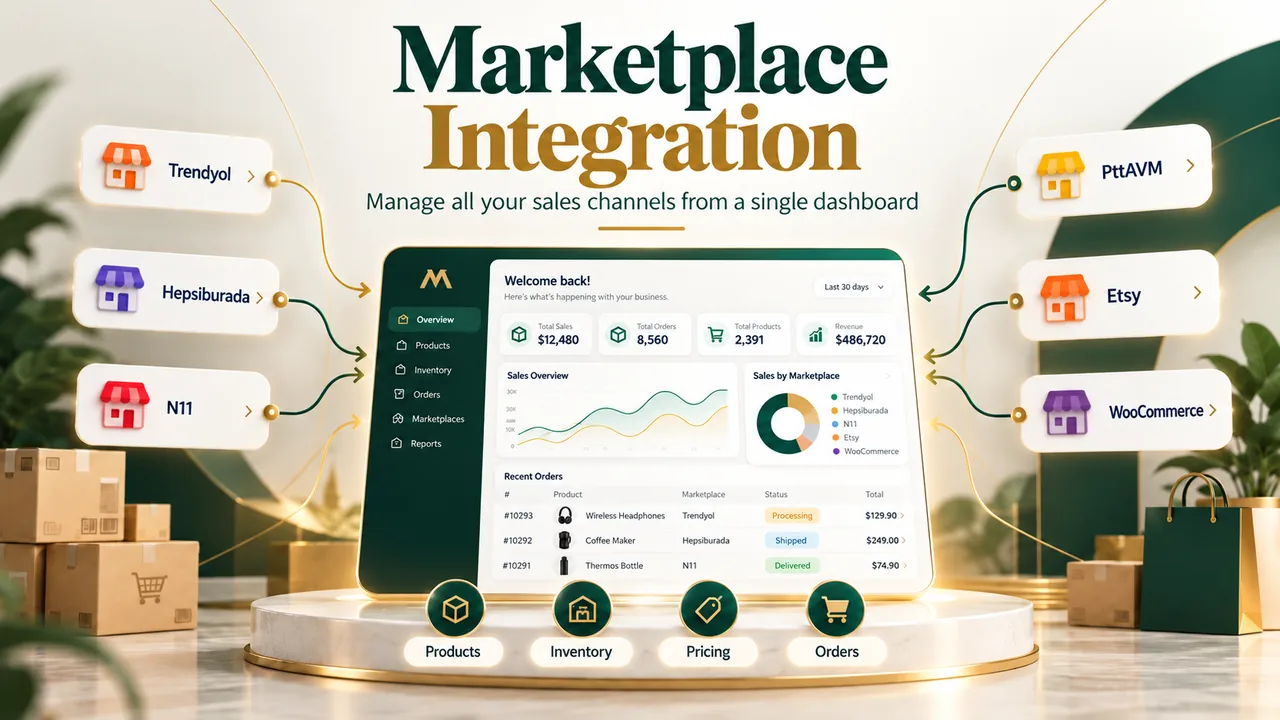
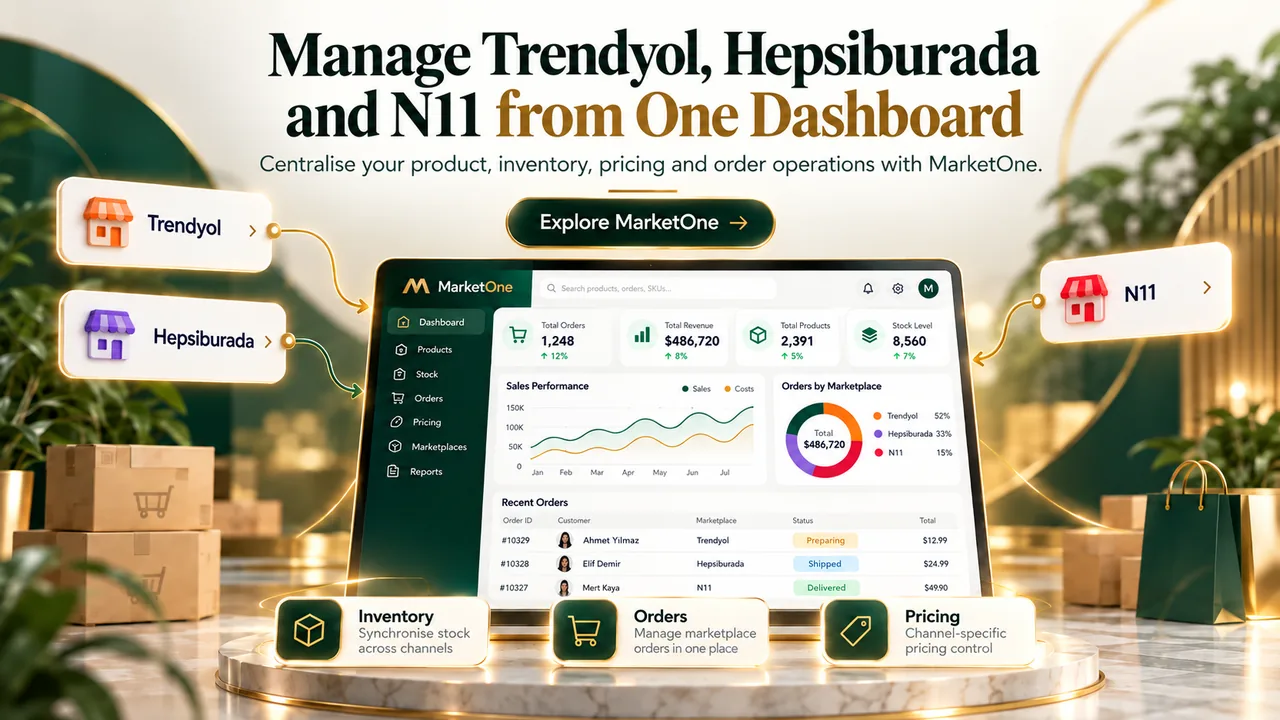
A practical way to coordinate repeat tasks across Trendyol, Hepsiburada, N11, PttAVM, Etsy, WooCommerce and your online store.
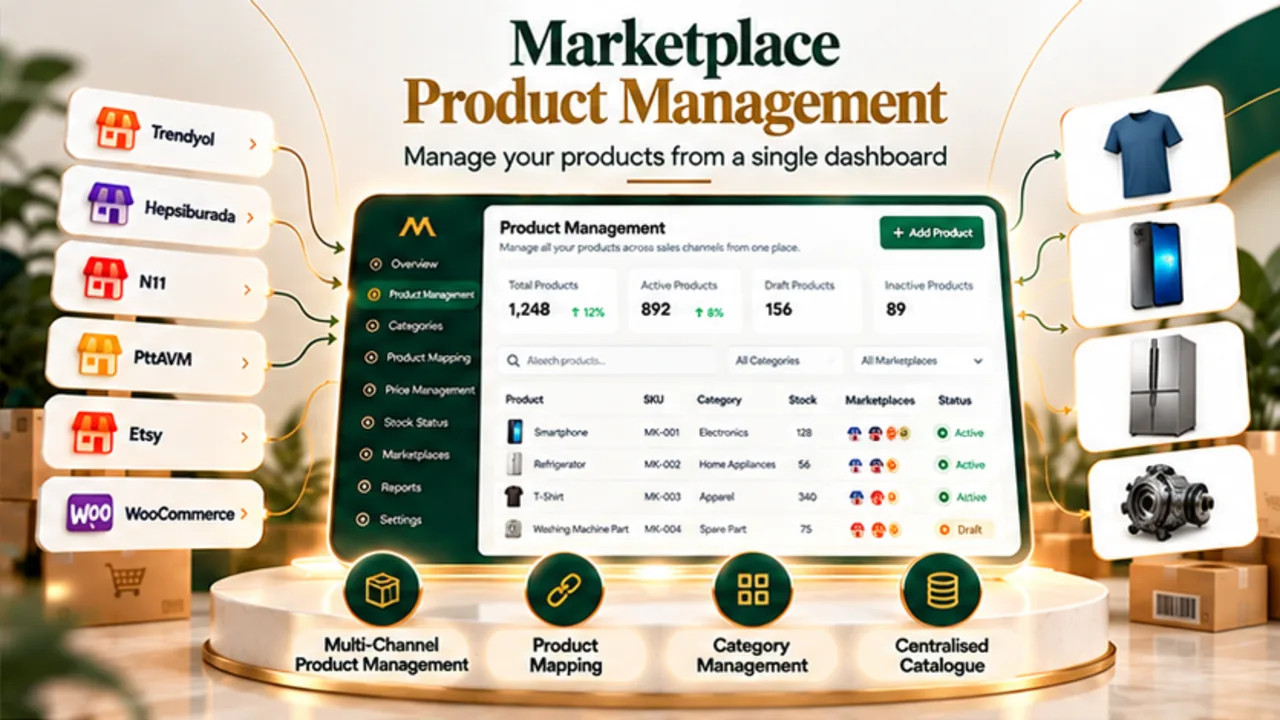
Products and categories
Manage catalogue, variants and category mappings according to each channel’s requirements.
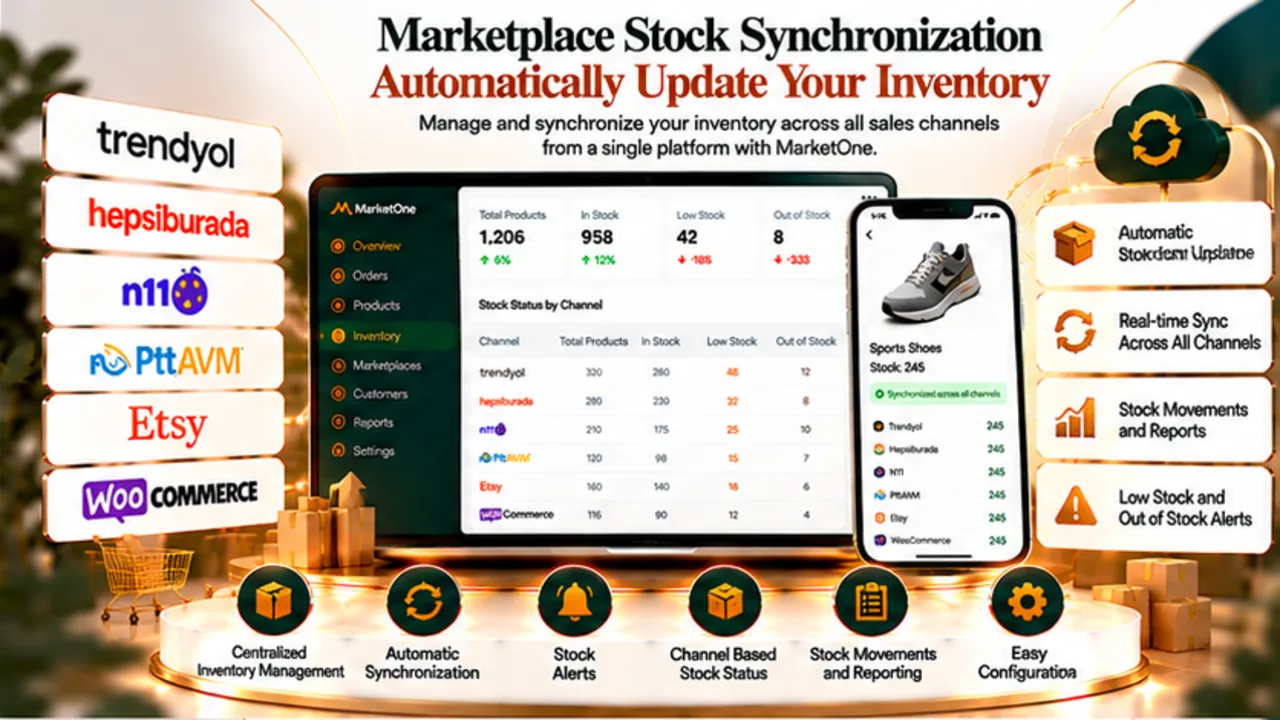
Inventory sync
Coordinate stock updates across connected channels.
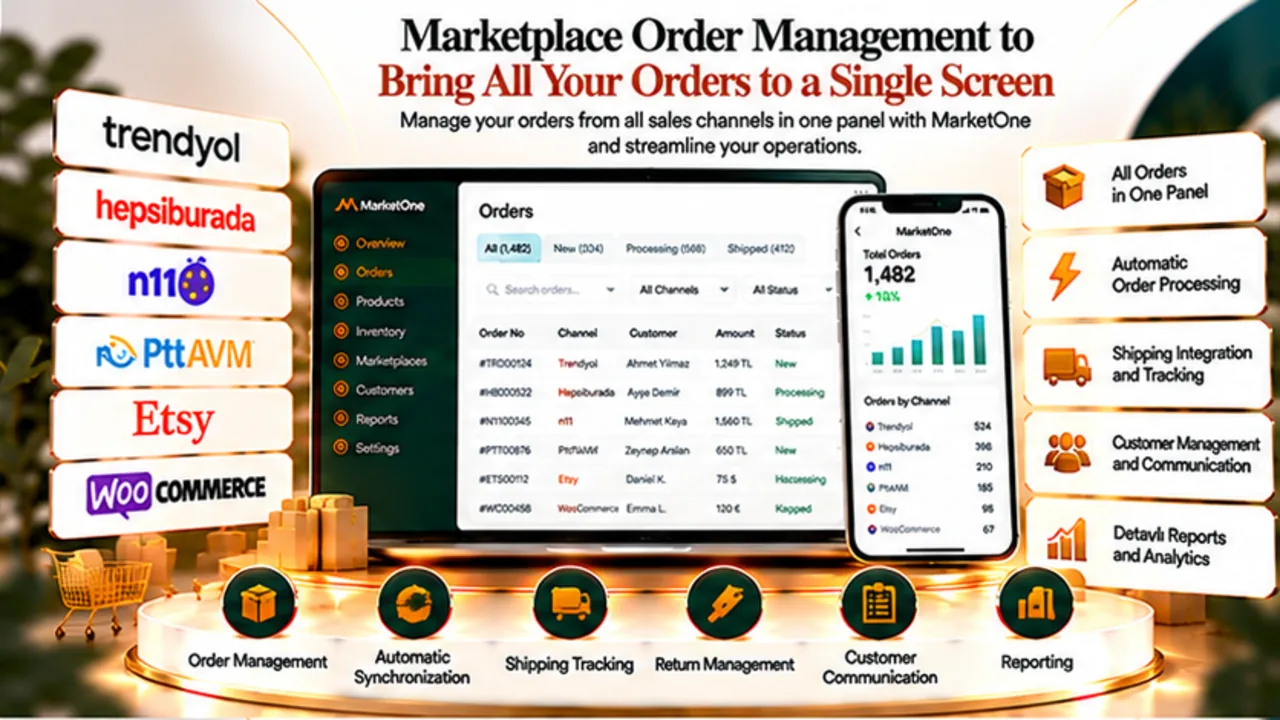
Order management
Review orders from different sources through a shared operational workflow.
Channel pricing
Adapt pricing decisions to the conditions of each sales channel.
Supported sales channels
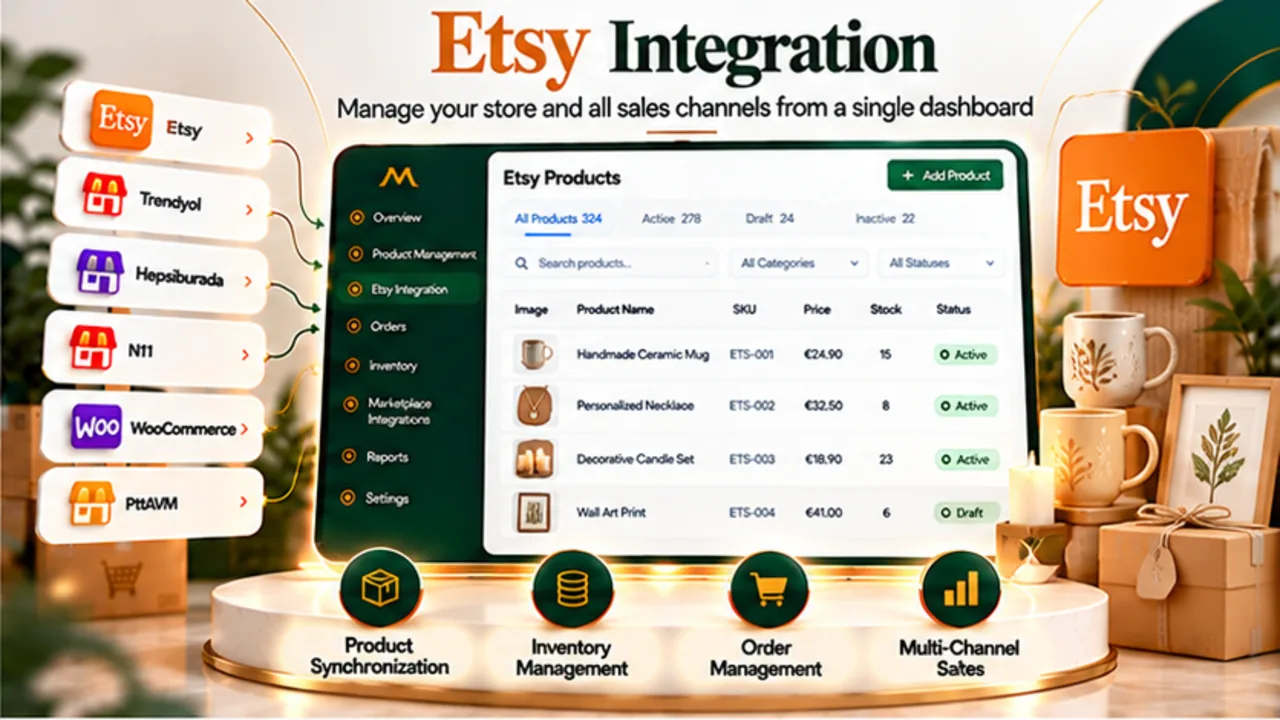
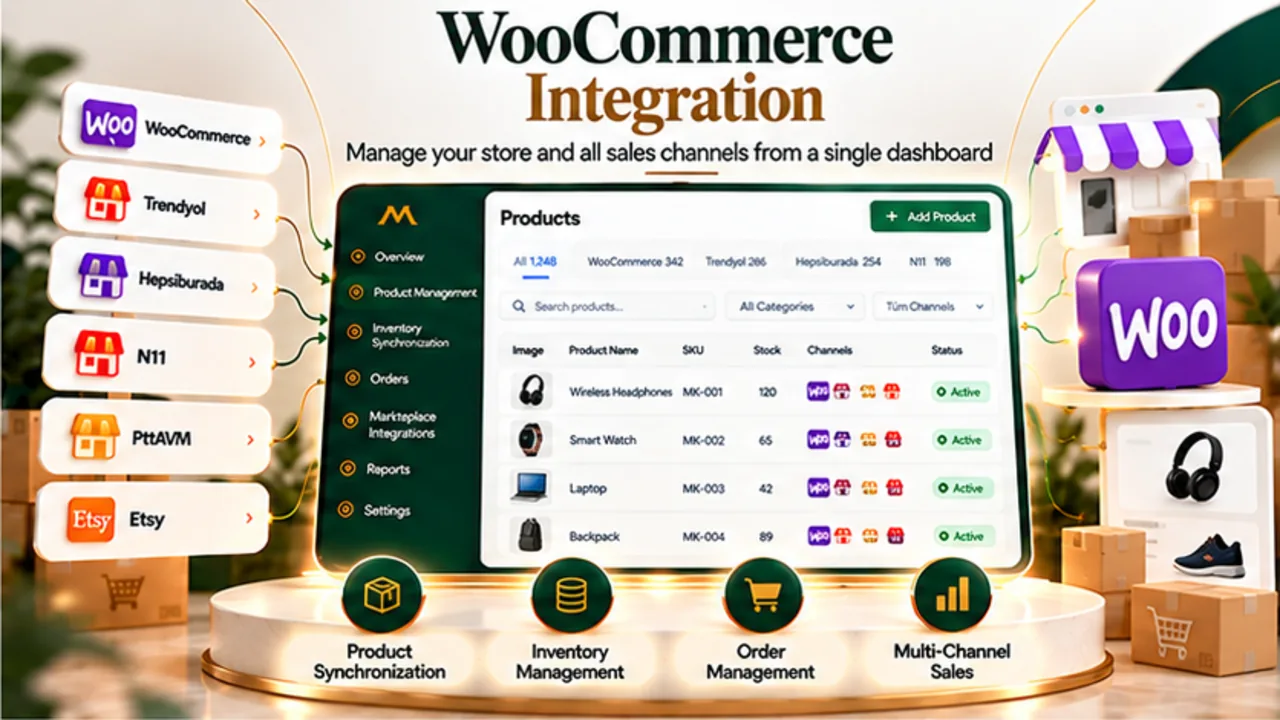
MarketOne supports connections to Trendyol, Hepsiburada, N11, PttAVM, Etsy and WooCommerce. Available actions depend on each channel API and the enabled integration scope.
Your online store and marketplaces together
Plan product publication, order processing and responsibilities across your own store and marketplaces.
Product and variant mapping
Category trees and mandatory attributes differ between marketplaces. Check SKUs, variants and category mappings before publishing.
Inventory coordination
Shared inventory is important when one item sells on multiple channels. Allow for update delays and consider stock buffers.
Orders and fulfilment
Standardise incoming, processing, dispatched and completed stages. Handle cancellations and returns under each channel’s rules.
Channel-specific pricing
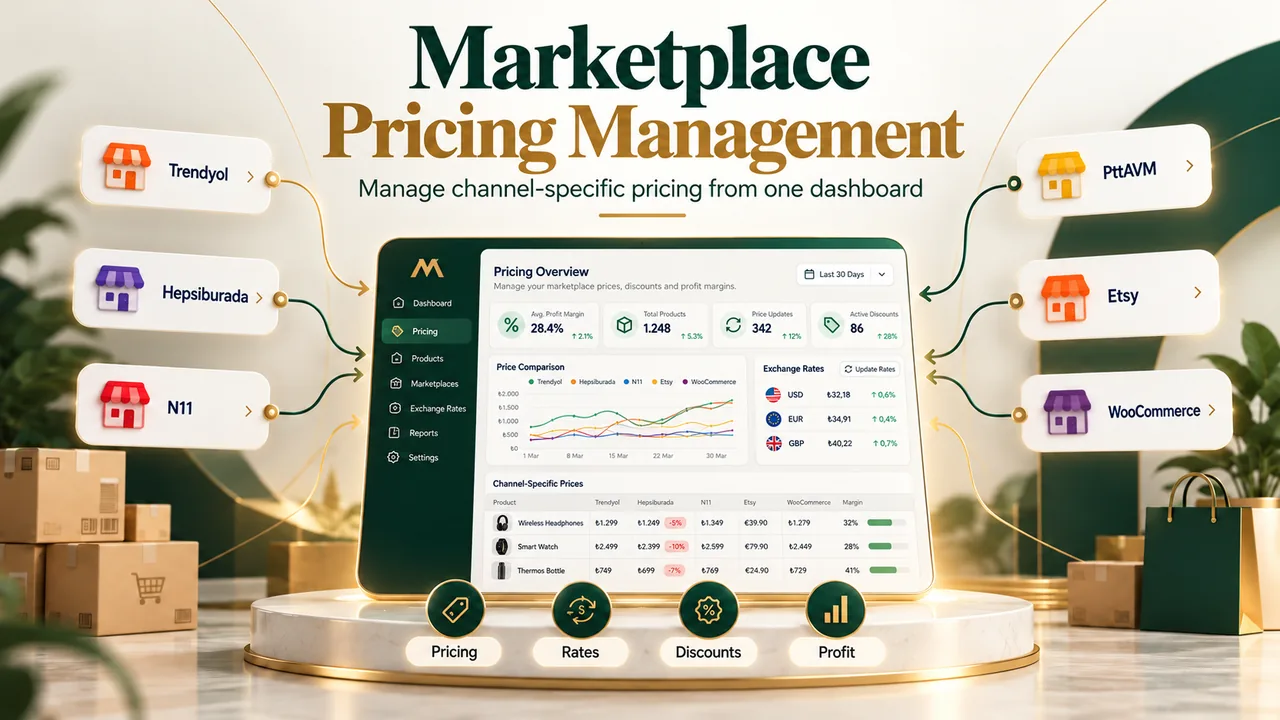
Commissions, shipping costs, promotions and margin targets may require different prices by channel.
Shipping, returns and customer messages
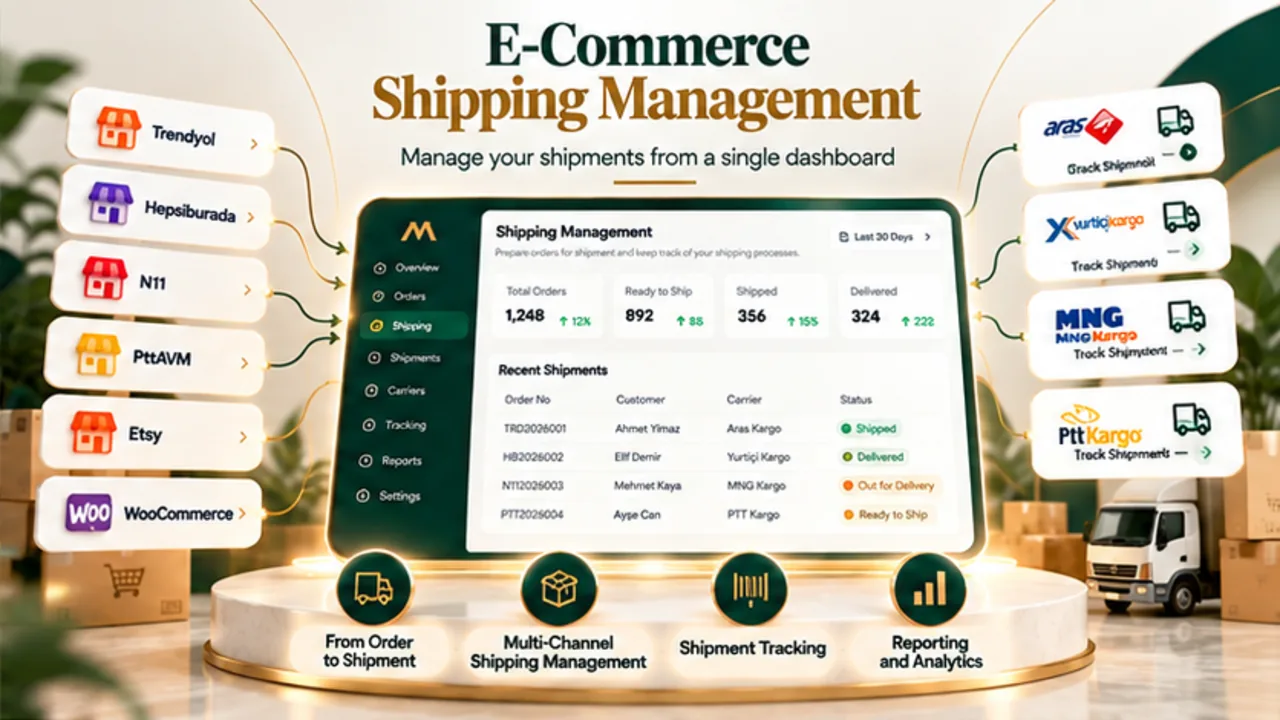
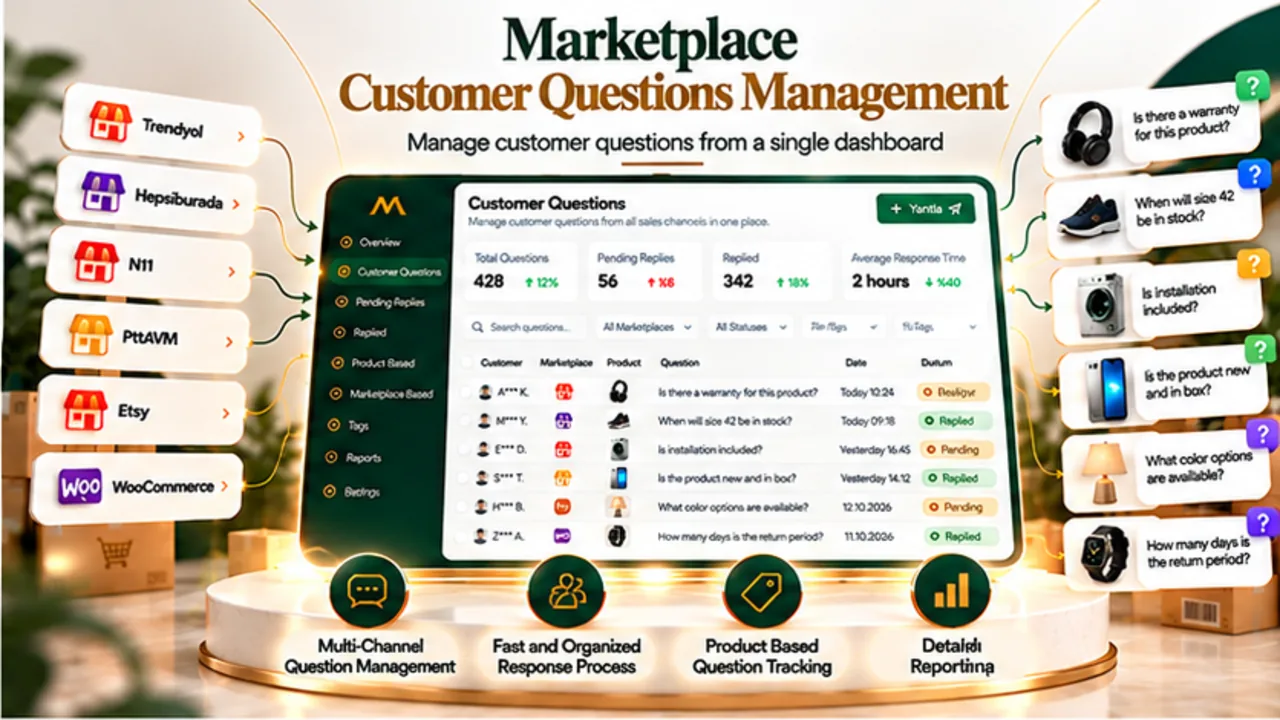
Shipping methods, returns and customer questions vary by marketplace. Coordinate only the actions supported by the relevant integration.
Payments and e-invoicing
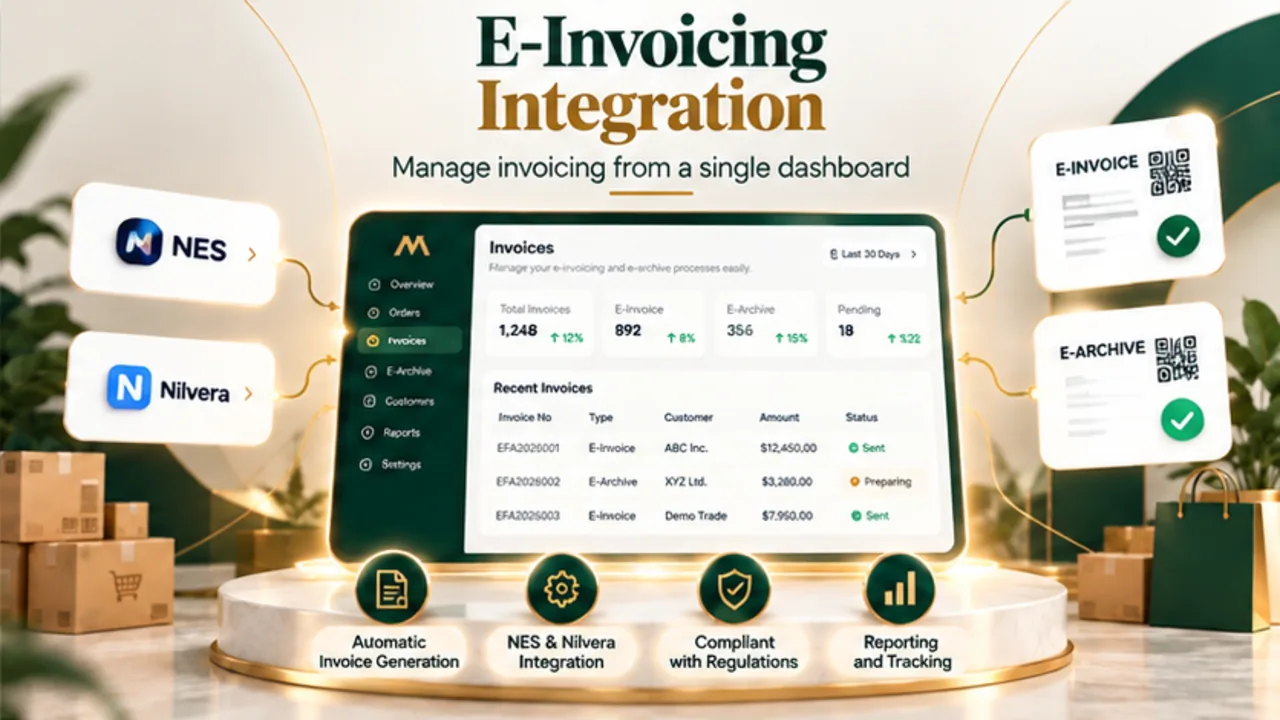
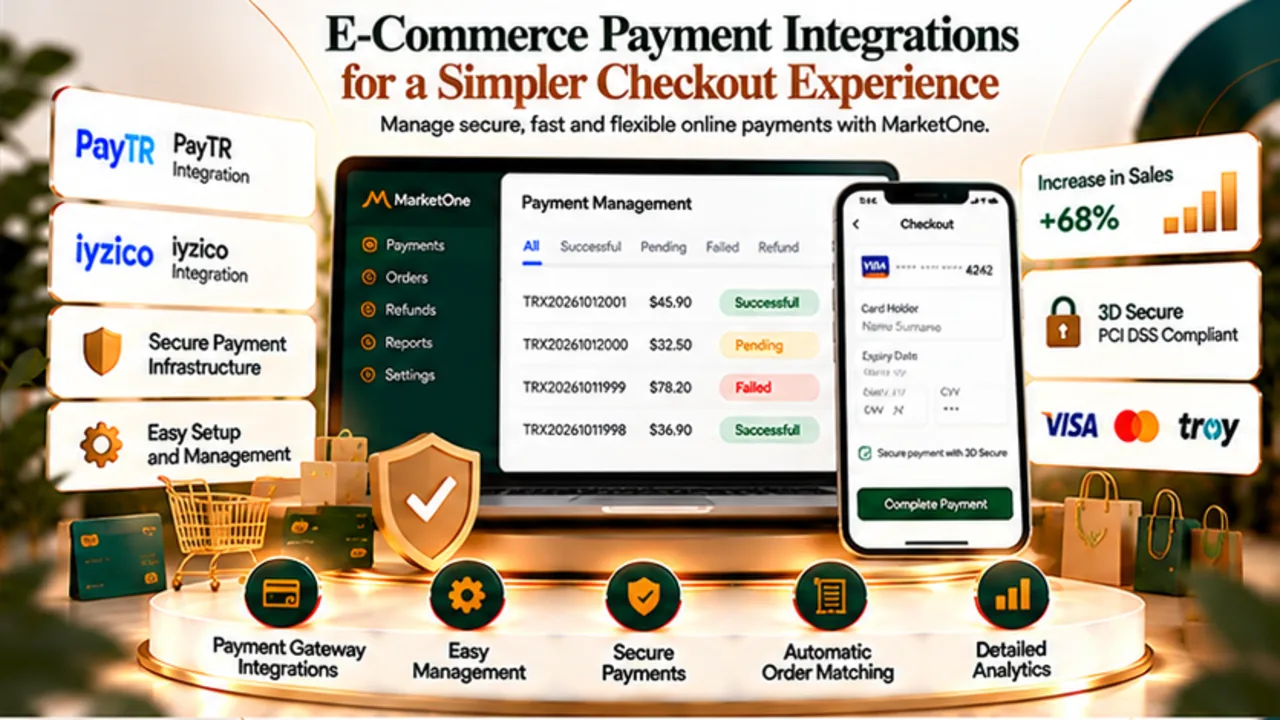
Consider supported payment services such as PayTR and iyzico and e-document services such as NES and Nilvera as parts of the wider operational flow.
Mobile commerce and marketing
Align branded mobile shopping and supported marketing workflows with product and order processes.
Reporting and performance
Compare sales by channel, period, product and category. Revenue is not profit: account separately for costs, commissions and returns.
A practical migration path
Standardise SKUs and inventory sources first. Connect channels gradually and test products, orders and exception handling.
Disconnected tools or one central workflow?
| Separate tools | MarketOne | |
|---|---|---|
| Product updates | Repeated entry across channels | Central catalogue with channel mapping |
| Inventory | Separate checks and inconsistency risk | Coordinated stock updates |
| Orders | Switching between dashboards | Shared operational overview |
| Reporting | Scattered data sources | Cross-channel comparison approach |
Implementation checklist
- Standardise SKU and variant identifiers.
- Identify the channels to connect.
- Define your inventory source and stock buffer.
- Document channel commissions and pricing rules.
- Test order, cancellation and return scenarios.
- Assign owners and performance indicators.
Frequently asked questions
Are omnichannel and multichannel the same?
No. Multichannel describes selling in several places; omnichannel focuses on connected processes and experiences.
Which marketplaces are supported?
Connections include Trendyol, Hepsiburada, N11, PttAVM, Etsy and WooCommerce within their integration scope.
Are all features available on every channel?
No. Features depend on the channel API and enabled integration.
Is stock updated instantly?
Timing depends on technical conditions and processing load; zero delay is not guaranteed.
Can I include my own online store?
MarketOne is designed to bring an online store and supported marketplace operations together.
How should I start?
Map your SKUs, inventory source, channels and order workflows before rollout.
Bring your sales channels into one coordinated operation
Explore MarketOne’s product, inventory, order and channel management capabilities.
Explore MarketOne