Centralised marketplace management
What is marketplace integration?
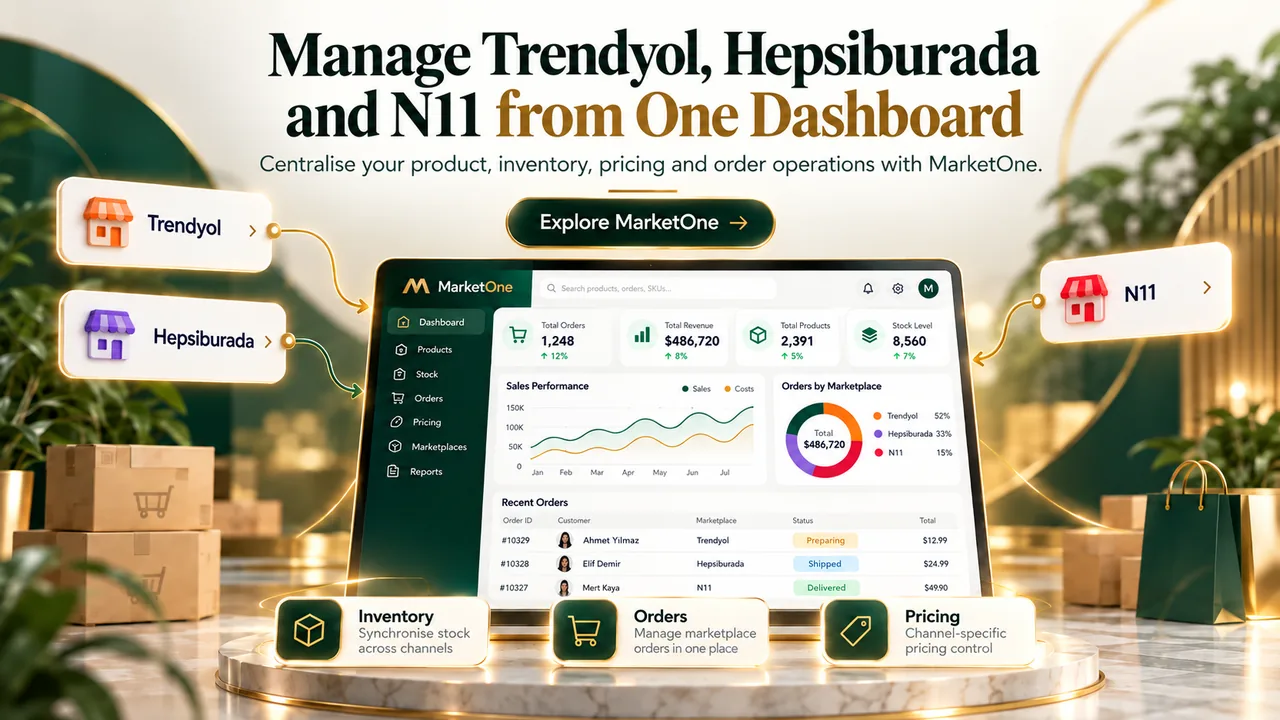
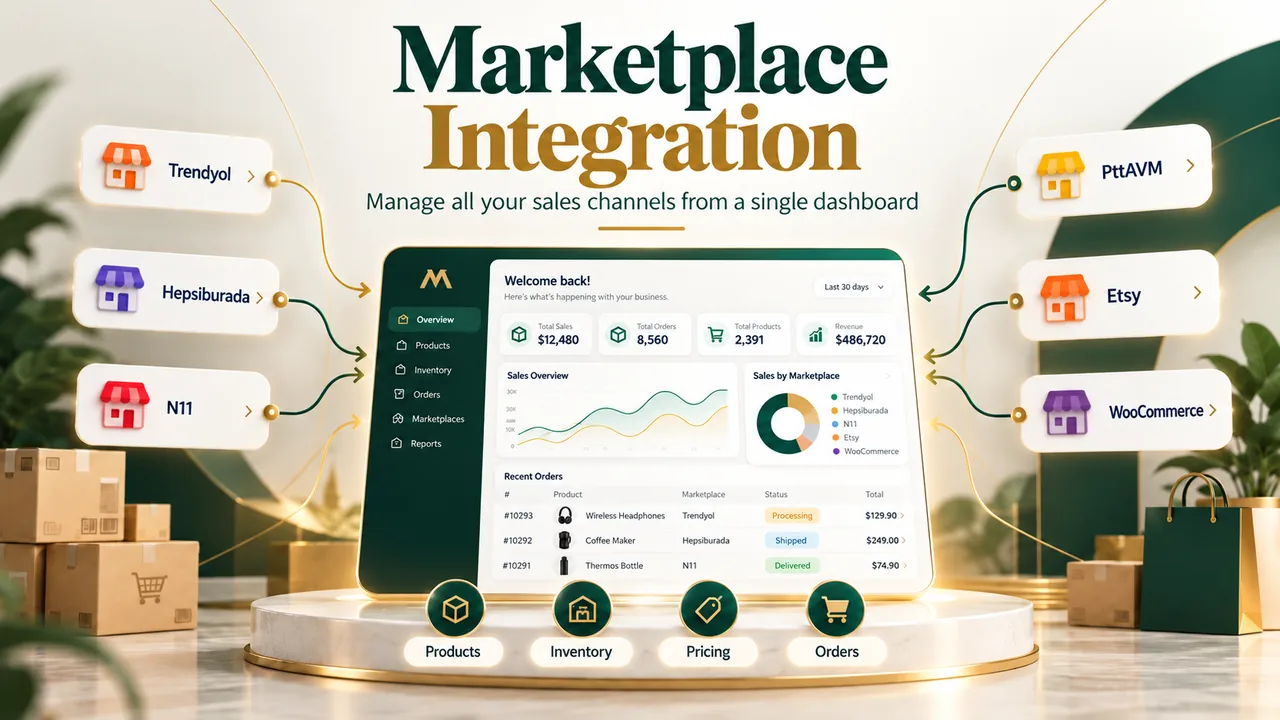
Marketplace integration brings product, inventory, pricing, order and operational workflows from multiple sales channels into one central management environment. Instead of managing every marketplace separately, core e-commerce operations can be monitored and controlled from a single dashboard.
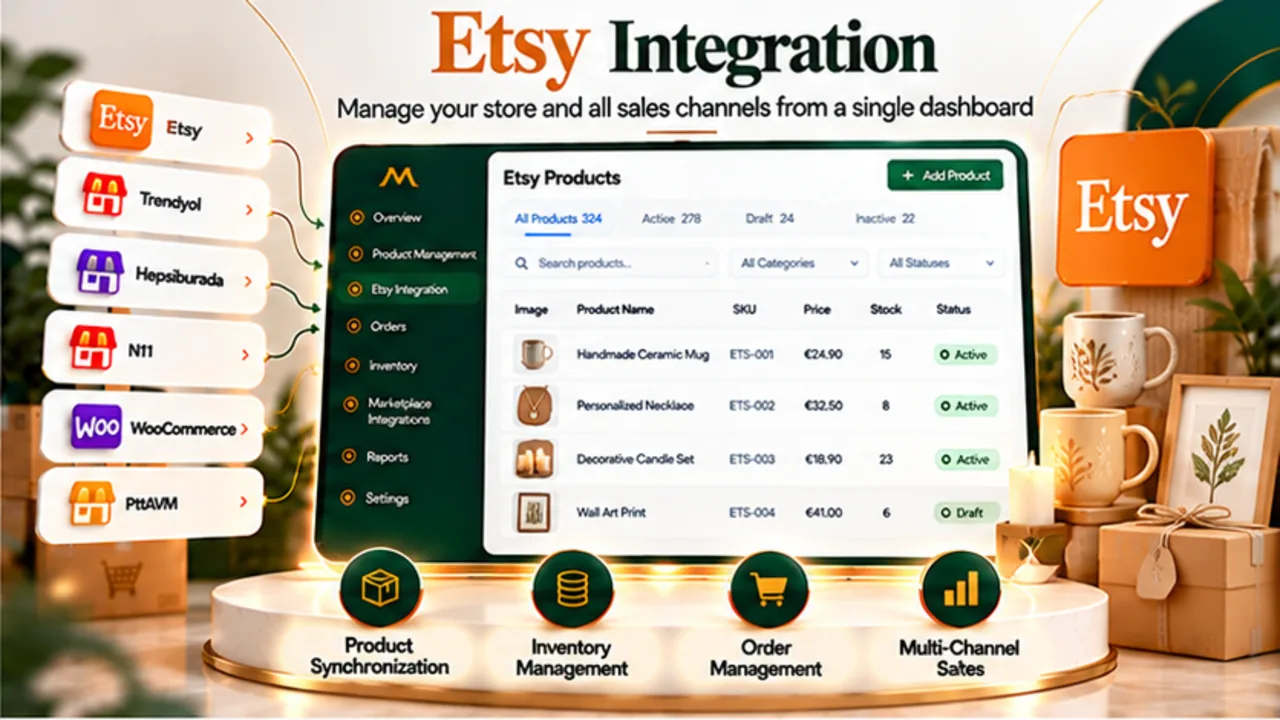
MarketOne connects sales channels such as Trendyol, Hepsiburada, N11, PttAVM, Etsy and WooCommerce in one management structure, helping multichannel e-commerce operations stay more consistent and easier to control.
One dashboard, less operational overhead
You do not need to manage every marketplace separately
As the number of marketplaces grows, inventory, pricing, order and product information can quickly become fragmented. This increases manual work and creates more opportunities for operational errors.
Product management
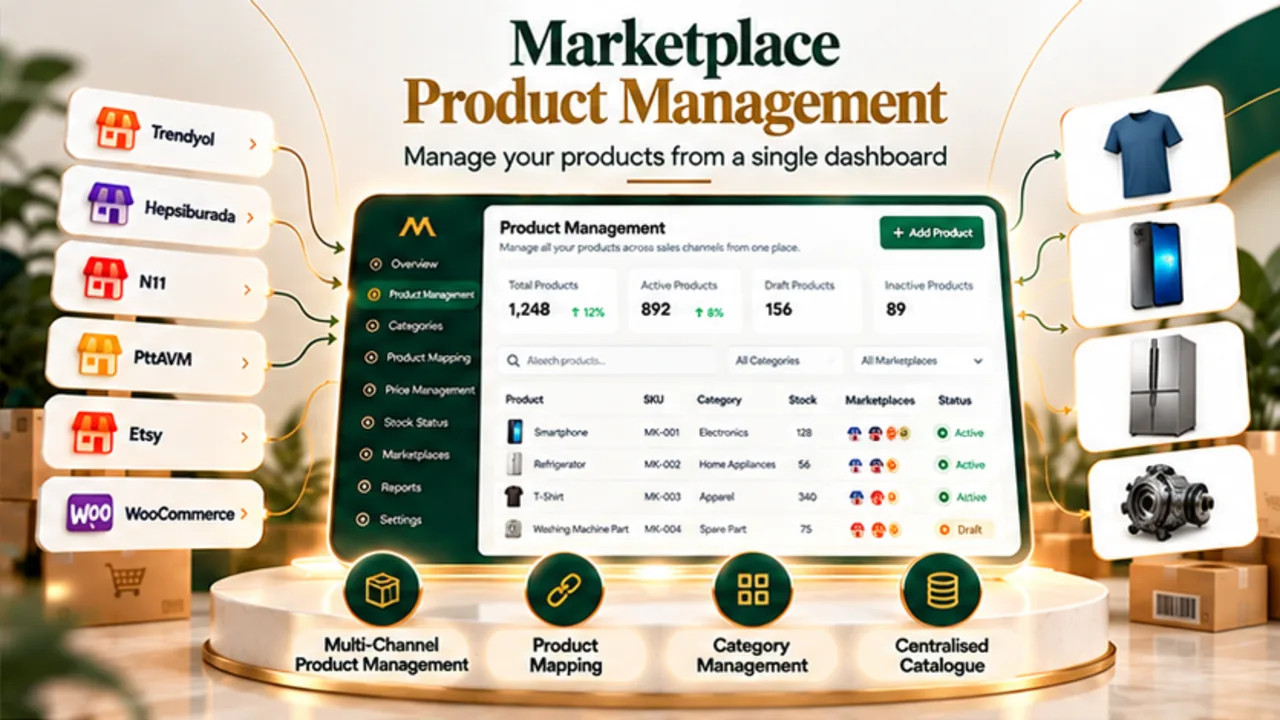
Manage product, category, brand and variant mappings centrally.
Inventory synchronisation
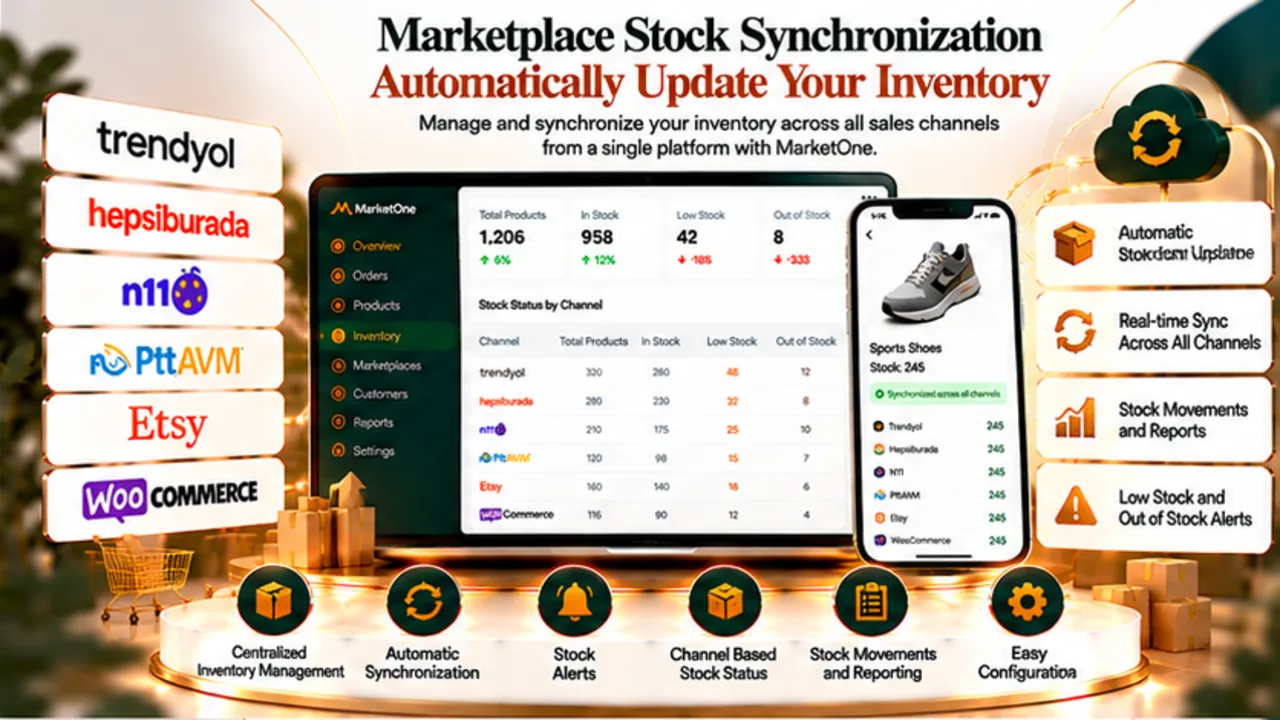
Keep inventory information aligned across connected sales channels.
Order management
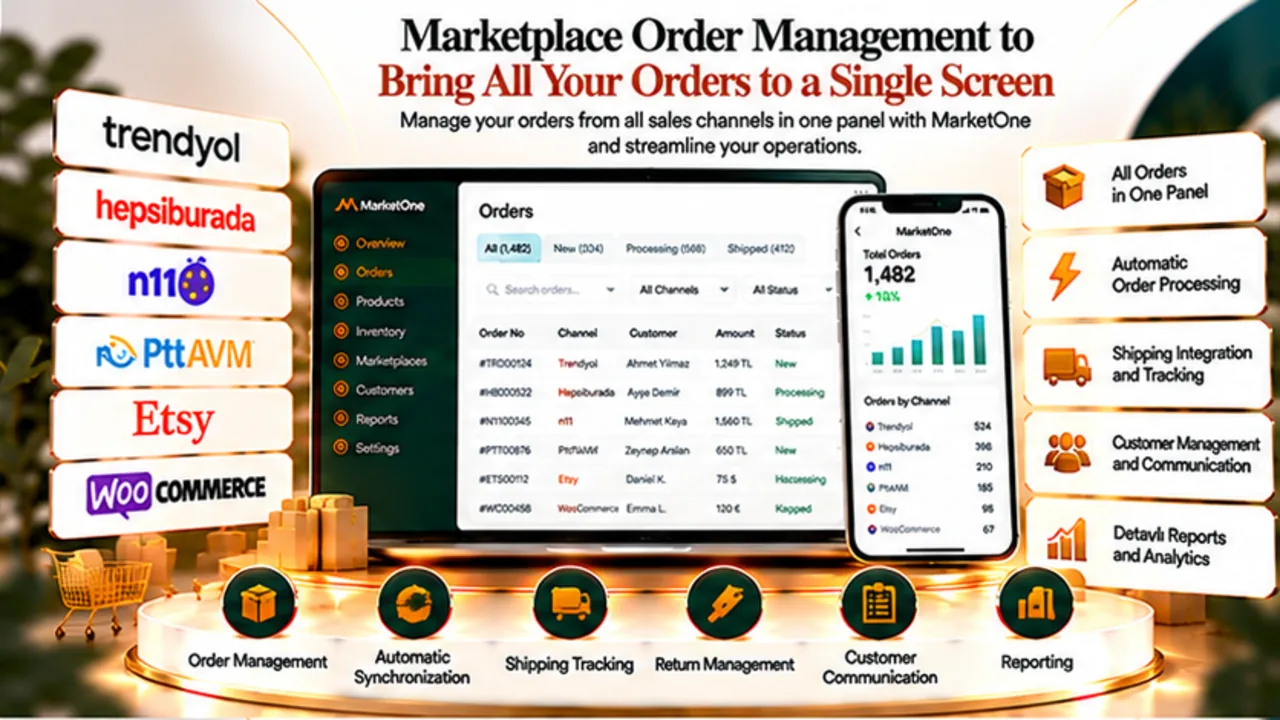
Track orders from multiple channels from one central workspace.
Channel-specific pricing
Apply different pricing and stock policies to individual sales channels when needed.
Connected sales channels
Bring Trendyol, Hepsiburada, N11 and other sales channels into one system
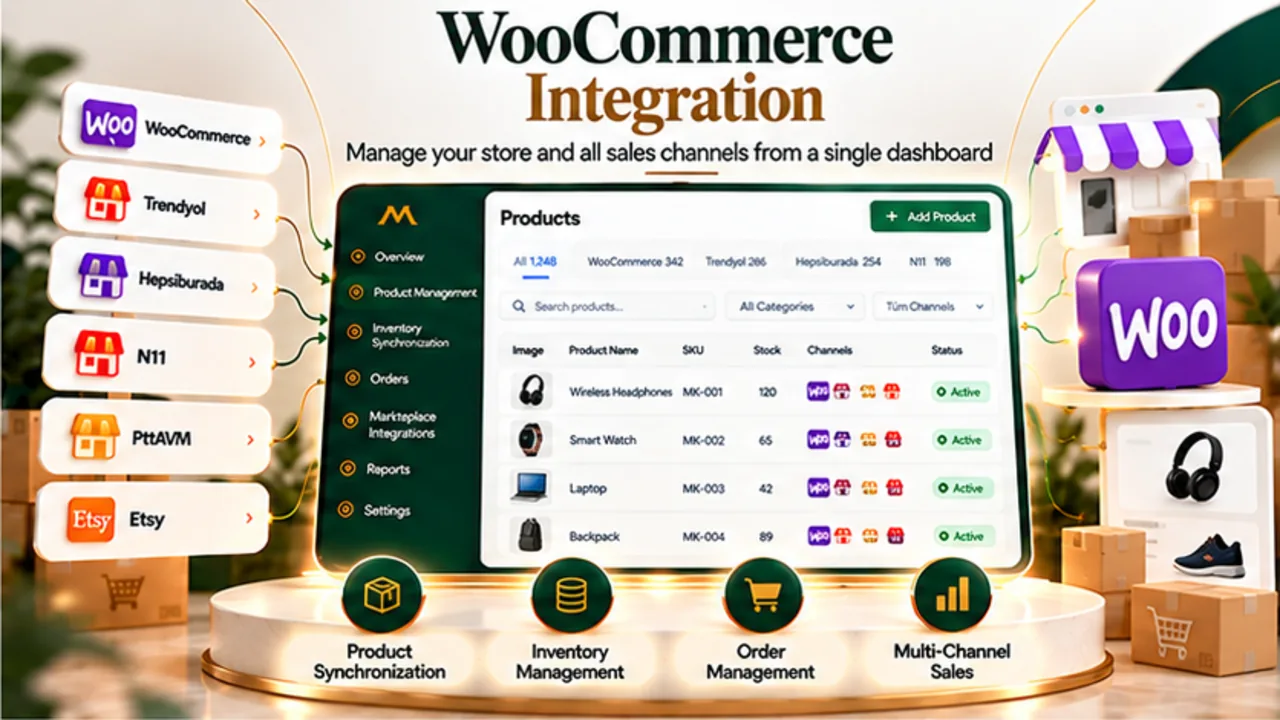
MarketOne helps Trendyol, Hepsiburada, N11, PttAVM and Etsy marketplaces work alongside WooCommerce stores within a shared management environment. Available workflows may vary depending on the capabilities of each channel.
- Trendyol integration
- Hepsiburada integration
- N11 integration
- PttAVM integration
- Etsy integration
- WooCommerce integration
Accurate inventory visibility
How does marketplace inventory synchronisation work?
When the same product is listed across several sales channels, keeping inventory aligned becomes one of the most important operational tasks. MarketOne helps distribute central inventory information to connected channels, reducing inconsistencies between marketplaces.
When inventory changes after an order, the related channel stock levels can be updated accordingly. Channel-specific inventory rules and quantities can also be applied when required.
Bring orders together
Centralise marketplace order management
Instead of monitoring orders through separate marketplace panels, bring them into one central workflow. View the sales channel, product, customer and order status as part of the same operational process.
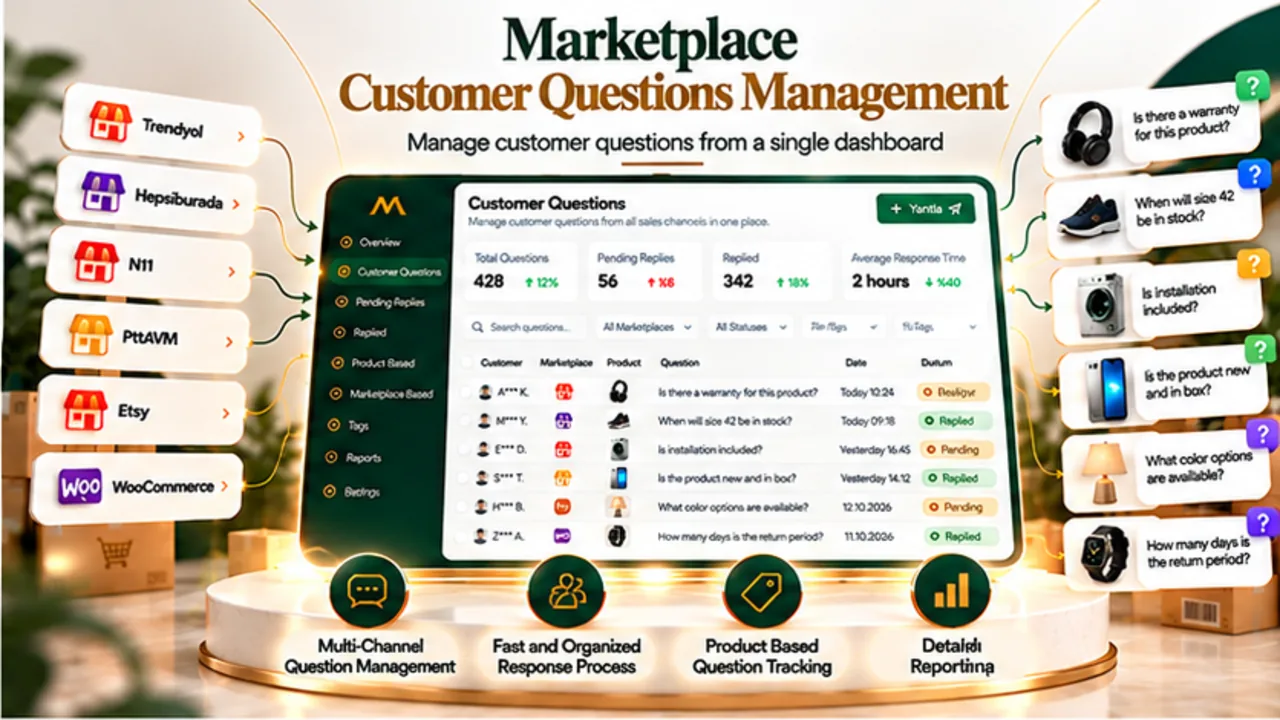
Where supported by the channel, shipping, customer questions and return workflows can also be included in the central operation.
Catalogue control
Manage product, category, brand and variant mappings
Marketplace catalogue structures can differ significantly. MarketOne helps products and variants map to the appropriate channel structures so catalogue management remains controlled across multiple marketplaces.
Channel-specific commercial rules
Centralise marketplace pricing management
When different sales channels require different commercial strategies, channel-specific pricing can be managed from one system. MarketOne can also use TCMB exchange-rate data to help automate exchange-rate-based price updates.
From sale to operation
Connect marketplace sales with payment and invoicing workflows
MarketOne is more than a marketplace connector. In-store sales, payments and invoicing can also be brought into the same operational structure.
E-invoicing and e-archive
Manage supported invoicing workflows through NES and Nilvera integrations.
Online payments
Manage card-payment workflows through PayTR and iyzico.
Bank transfer
Include bank-transfer payment options in your sales workflow.
In-store POS
Bring physical store sales into the same management environment as online commerce.
A straightforward operational flow
How does marketplace integration work with MarketOne?
- Connect your sales channels: Add the marketplaces and commerce platforms you use.
- Map your products: Configure product, variant, category and brand mappings.
- Define inventory and pricing rules: Set channel-specific stock and pricing policies.
- Centralise orders: Monitor incoming orders from a shared operational workspace.
- Connect invoicing and related workflows: Add e-invoicing, payment and notification processes where needed.
Built for growing commerce operations
Who is marketplace integration software for?
Centralised management can create a major operational advantage for businesses already selling on multiple channels or planning to expand into new marketplaces.
- E-commerce businesses selling on multiple marketplaces
- Brands managing WooCommerce alongside marketplace channels
- Teams looking to reduce manual inventory and order tracking
- Businesses applying channel-specific pricing and stock policies
- Companies that want to unify online and in-store commerce operations
Choose the right platform
What should you look for in marketplace integration software?
| Criterion | Why it matters |
|---|---|
| Inventory synchronisation | Helps reduce stock discrepancies across channels. |
| Order management | Brings orders from different marketplaces into one operational flow. |
| Product and variant mapping | Makes it easier to work with different catalogue structures. |
| Channel-specific pricing | Allows different commercial rules for each marketplace. |
| Invoicing | Helps connect orders with e-invoicing and e-archive workflows. |
| Scalability | Supports operations as sales channels and order volumes grow. |
Migration
Move from your existing e-commerce platform to MarketOne
Product and operational data can be migrated from sources such as Excel, JSON, APIs or WooCommerce. Mapping and preview steps can be used to plan a controlled transition.
Centralise with MarketOne
Bring your marketplace operations into one dashboard
Explore MarketOne’s marketplace, inventory, order, pricing, payment and invoicing capabilities on the product page.
Frequently asked questions
Marketplace integration FAQ
What is marketplace integration?
It is an integration structure that allows product, inventory, pricing and order workflows across different marketplaces to be managed centrally.
Which marketplaces can MarketOne integrate with?
MarketOne can work with channels such as Trendyol, Hepsiburada, N11, PttAVM, Etsy and WooCommerce.
Can MarketOne synchronise marketplace inventory?
Yes. Central inventory information can be distributed to connected sales channels, with channel-specific inventory rules when needed.
Can I view Trendyol, Hepsiburada and N11 orders in one dashboard?
Yes. Orders from connected sales channels can be monitored from one shared management environment.
Can I use different prices on different marketplaces?
Yes. MarketOne supports channel-specific pricing and inventory settings.
Can WooCommerce be connected to marketplace channels?
Yes. A WooCommerce store can be managed alongside other connected sales channels through MarketOne.
Can e-invoicing workflows also be managed?
MarketOne can help manage supported e-invoicing and e-archive workflows through NES and Nilvera integrations.
Is MarketOne only a marketplace integration tool?
No. Inventory, orders, pricing, POS, payments, e-invoicing, customer communication, mobile apps, SEO and other e-commerce operations are also part of the platform.
Can I migrate my existing data to MarketOne?
Yes. Migration scenarios from Excel, JSON, APIs and WooCommerce can be supported.
What is the most important factor when choosing marketplace integration software?
Do not evaluate only the number of supported channels. Inventory synchronisation, order management, catalogue mapping, pricing, invoicing and scalability all matter.